Hiking on Maui
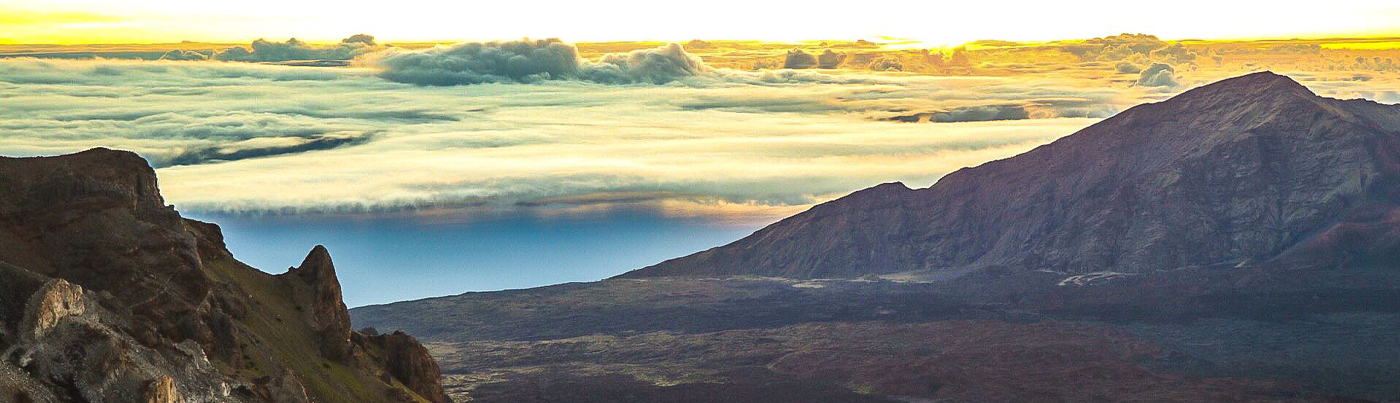
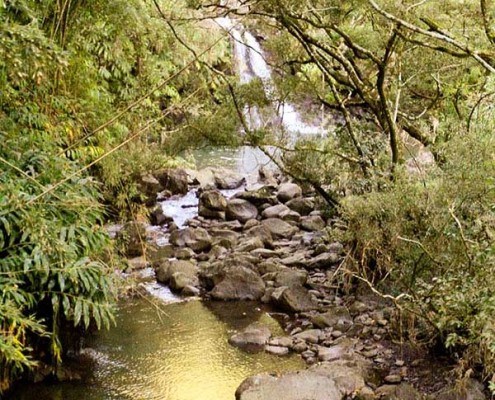
There are many types of hikes in Maui. They are as diverse as it gets covering dozens of climate zones, many of which are found nowhere else in the world! From 10,000 alpine deserts to lush rainforest and waterfalls, Maui offers something for almost ever skill level.
Keep in mind that safety should be your number one concern as people are rescued from dangerous hiking situations weekly and throughout the year. The weather can change quickly at higher altitudes and flooding is not uncommon in the winter months. If you want to see the most and enjoy the adventure to the utmost it is best to consider booking a guided hike or combo activity. You’ll see and learn more, and stay safe, while with a professional guide!
Here are few suggestions to give you an idea of the types of hikes to do in Maui:
Pools Of Oheo Trail
This is one of the best and safest hikes you can do on the Hana side of Maui. The rainforest meets the ocean at this section of Haleakala National Park and offers some of the best viewpoints of the lush Hana coastline. An entrance fee is required and the facilities are top notch. There are basically two parts of the same trails here, the upper and lower parts of Pipiwai trail. The lower section starts from the ranger station down to the ocean where Oheo Gulch and the pools are located. The path continues up the gulch overlooking the pools and ocean.
The upper part starts on the other side of Hana Highway and winds through the rainforest of bamboo and raised walkways. At the top of this trail is a 200ft waterfall. The entire round trip hike will take about 2 hours with a stop at the waterfall.
Sliding Sands Out Kaupo Gap
Kaupo Gap – A 2 day trek
A great way to spend your days on Maui is checking out many of Maui’s picturesque hiking trails. Most are quite tiny when comparing them to the west coast or Appalachian hiking trails on the mainland. The longest Maui hike is a comfortable 2 day adventure from Haleakala’s Summit down to the ocean by way of the Kaupo Gap. Bring bug repellent and hiking boots, no sneakers or flip flops for this trek. A permit is required for backcountry treks such as this so be sure to check with the park headquarters when hiking into Haleakala.
Twin Falls – Maui Waterfalls Hike
Twin Falls is a couple of hours of fun hiking and swimming in a waterfall. A locally owned bio-diverse family farm turned cafe and hiking spot. You can really feel what it must have been like to be a native Hawaiian about 100 years ago… and add a little modern day conveniences into it like a cafe which creates delicious food from scratch. It is one of our favorite stops even with the kids. Bring the bug repellent and wear sturdy hiking boots, you’ll thank us. There is usually a good bit of rain in this area and the bugs as well as mud can be a problem. Also, keep in mind that the water coming down this mountain which creates the waterfalls is cold, really, it is. So don’t just jump in without putting your toe in first. Also, make sure you go feet first and NEVER dive in headfirst. There are rocks below and some are shallow and others are not. A good rule of thumb is to get in first, find the deep spot and then cannonball!
Iao Valley State Park Trail
Visiting the Iao Valley State Park in the morning, well before the afternoon rains is a perfect way to start the day. The Iao also has a wonderful cultural area, facilities and downright amazing flora which has been labeled for your education and enjoyment. Bring a picnic and your sketchbook to do some drawing of the needle and other beautiful scenes in this park. The hikes are shorter and paved with stairs up to a covered viewing area.
Notice – Iao Valley is closed due to an extensive winter flood. The park is currently under repair with no known opening date as of spring 2017.
Pipiwai Trail
The dense rainforest eats up the signage and paths are not well marked except in the National Park. The Pools of Ohe’o is your best bet for a safe hike as the jungle can give way to unseen cliffs and loose footing. Pipiwai Trail is a great path maintained by the National Park Service. The first of three bamboo forests has a raised walkway through it about a mile into this 4 mile hike. At the top of the trail, after gaining 65o feet in elevation, is Waimoko falls. It is a big waterfall at 400ft high with a large pool. Be careful though. This is a slippery rainforest. Flash floods are also common as rain can fall high above on the mountain slopes and come rushing down as a wall of water to the sunny clear skies of the coast below.
It will take you between 2 1/2 to 5 hours round trip depending on how you like to hike. Me being a photographer it takes me all day. If you’ve never been to Hana I suggest taking a van tour or a hiking tour. This is a great way to get your bearings and you’ll have a guide to answer questions and point out great places to come back to on your own time. This is also one of the best ways to learn about the culture and gain respect for the ‘aina (land).
Poli Poli State Park
Located on the western slopes of Haleakala is an area known as “Upcountry”. This term actually encompasses a huge area with a sparse, spread out community known as Kula. I’m not positive, but my guess is there are at least a dozen climate zones in this area.
One of my favorite trails on the island and one of the highest elevation hikes other than the crater is Poli Poli State Park. It is, in my opinion, one of the worlds most unique forests because it was planted as a watershed after decades of deforestation due mostly to farming, cattle ranching and logging. On these slopes directly above Keokea is an amazing forested tapestry of some 20 species of trees from all over the world. They include California Redwood, Cedar, Spruce, Chinese Fir, Monterey Jack Pine, Mexican Weeping Pine and Eucalyptus. They were planted by the CCC (Civilian Conservation Corps) which was a federal program that helped with reforestation on Maui from 1935-41.
Tips For Hiking Poli Poli
You’ll need a vehicle with good clearance as the road up the mountain is loose powder like dirt with large lava rocks underneath. A good portion is paved, but it is a steep switchback road so be careful not to overheat your vehicle going up or burn out your brakes coming down. Remember to bring some warm clothes as it can get surprisingly cold, especially in the afternoon. Heading up early as you can in the morning assures that you’ll have plenty of time to explore and you may even see some of Upcountry Maui’s wildlife such as wild Boar, Asian Axis Deer, Ringneck Pheasant and the Pueo (Hawaiian Owl) among others. There are many areas of Maui that have some wonderful hiking trails, but if you love the mountains you’ll truly enjoy this one. Just be safe and take your time.
Ancient Maui Hiking Trails
Hiking Maui’s ancient trails is not as easy an endeavor as it would seem.
There are definitely some things you should know before you go out hiking in Maui. Because of the many different climate zones, where you’re hiking can mean a big difference in gear and timing. There are many options with everything from a nice walk for miles on the beach to 10,000 ft elevation hikes on lava rock that take overnight camping to accomplish, not to mention the slippery wet rainforest paths and everything in between.
Some of my fondest memories living on Maui for over 20 years are of the magical hiking trails found all over the island. Often they were introduced to me by locals. Over the years many of these “secret spots” were earned by me, I feel, because of the respect I have shown to the culture, the land and the people as a professional photographer. Recently more and more of these spots have been “revealed” by guide books. This has caused land owners to put up gates and run people off because of crowding and liability. My hope is that this can be reversed by informing visitors about how to safely enjoy the island with respect for it’s sacredness and rarity.
It’s a good idea to find a guide because not only do they know the conditions and trails but they often have arrangements with landowners to get into secluded areas. There are even some hiking companies that involve rappelling down waterfalls! If you do venture out on your own be very careful and please respect the culture. Hawaiians have been living in these remote areas for centuries and have always tried to manage the land (aina) very carefully…
The native Hawaiians divided their lands into Ahupua’as which were pie shaped sections of land that extended from the mountain summit to the ocean. This land provided the Hawaiians with a large variety of abundant resources that sustained a high quality of life in ancient times. Each Ahupua’a had a village and an Alii (chief) who kept the land (aina) balanced and productive. We can learn a lot from the teachings of the Hawaiian ancestors and the sensitivity they had for the aina (land). In ancient times resources were traded by land and sea with all the other villages and this was the basis for many of the main roads and trails of today.
One thing to keep in mind is that most of the land and thus the trails are either privately owned, in state preserves or within the national park. There are many areas of Maui that have excellent hiking from ½ day, full day and multiple days which would include camping. If your going to camp you need a permit, especially in the National Park.
Don’t underestimate weather conditions!
Flash flooding is common in the mountains and especially in Hana. To be sure book a guided hike as these professionals monitor weather conditions and know the land. Every year at least a handful of hikers have to be airlifted out of Hana jungles and off of ocean cliffs because conditions turned bad fast! “When in doubt, don’t go out” is the mantra for hiking in Hawaii!
One of the best tips I ever heard was from a Hana tour van guide who grew up in Hana and told the story from her childhood of how her parents would not let them play alone in the streams until they could hear a stone rolling in the water. This is because an incoming wall of flash flood water would push rocks out in front of it which was the first warning of impending danger.
If you do head out to Hana to get some hiking in, be sure your timing is working in your favor. Although it is a rainforest and rain can happen at any time, early mornings are magical with often clear skies and the trails and roads are empty. For instance, one of the best trails is at Haleakala National Park leading up Oheo Gulch and the valley along the stream. This trail can be packed with people rushing up and down it in the afternoons after having spent hours on a twisting, hair raising road. Some are frantic after trying to squeeze it in before the sun goes down. They end up rushing and not seeing anything trying to get back to the car before it’s dark.
My favorite way to “do” Hana is plan on staying out there for 1 to 2 nights. I’ve camped at Wai’anapanapa and in Kipahulu, which I always enjoy, but if you’ve got the budget for it there are many vacation rentals and, of course, Hotel Hana is hard to beat. By staying the night I’m able to be up with the sun, which rises off the ocean on this side of the island.
One of my favorite Maui experiences was hiking along the shore from Hana Bay to Waianapanapa. On this all day hike I watched, among many amazing spectacles, a pod of 20 Dolphins darting back and forth in a small cove. Suddenly an 400lb Marlin came clean out of the water a few feet in front of them. We sat at the edge of a 100ft high seaside cliff and watched them all chase a school of fish around the cove for over an hour while we ate our lunch. Best lunch I ever had. This is just a sampler of the many hiking trails in and around Hana.
Just remember this is rough tropical terrain, so don’t underestimate the conditions. Wear closed toe shoes and bring plenty of water. It gets hot and steamy in this jungle!