Waiʻānapanapa State Park & Black Sand Beach
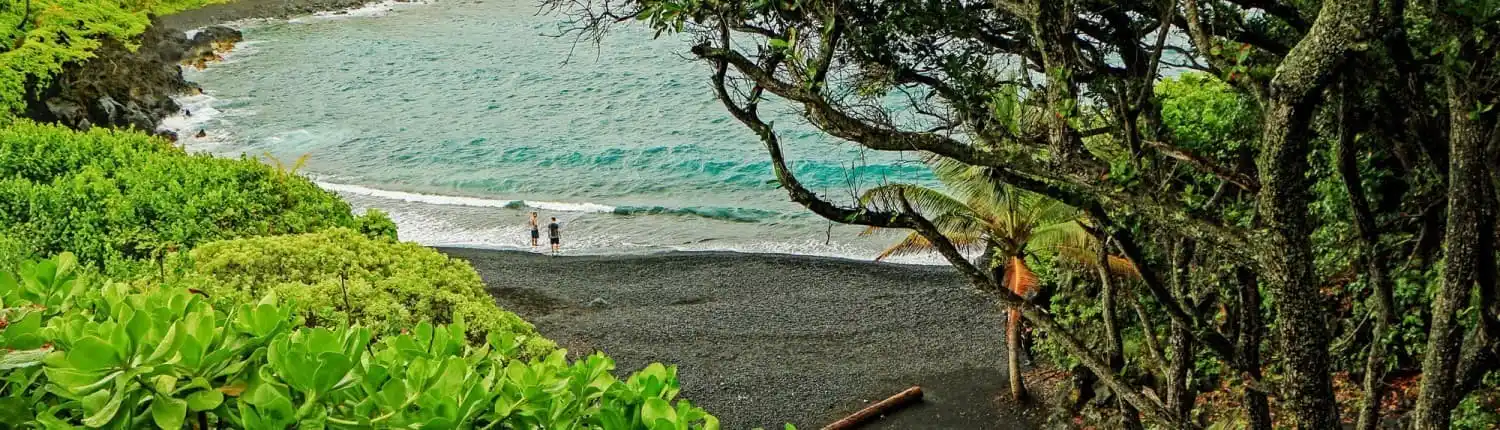
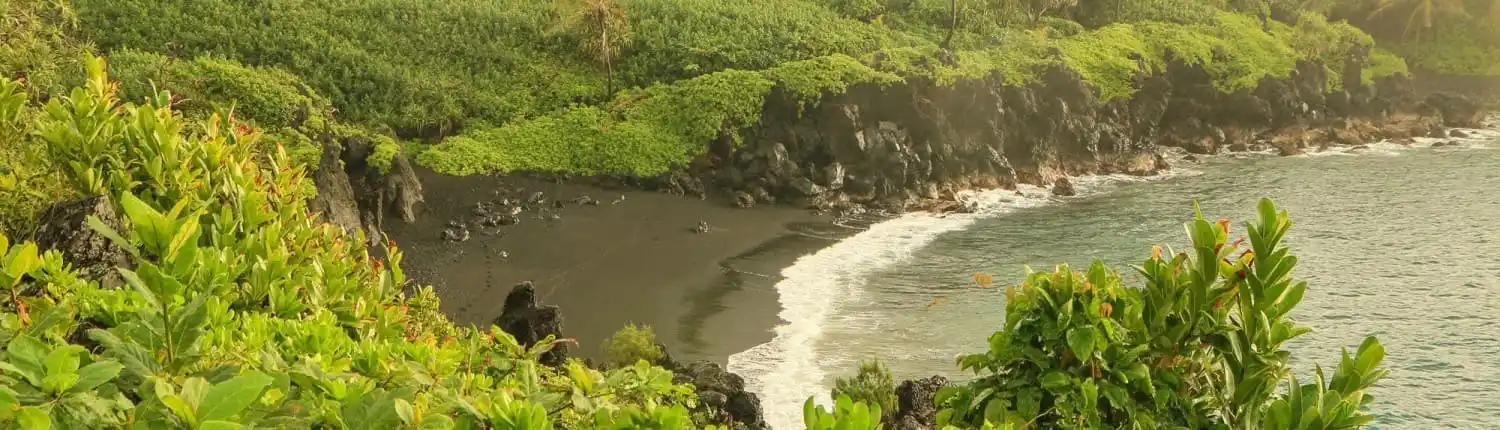
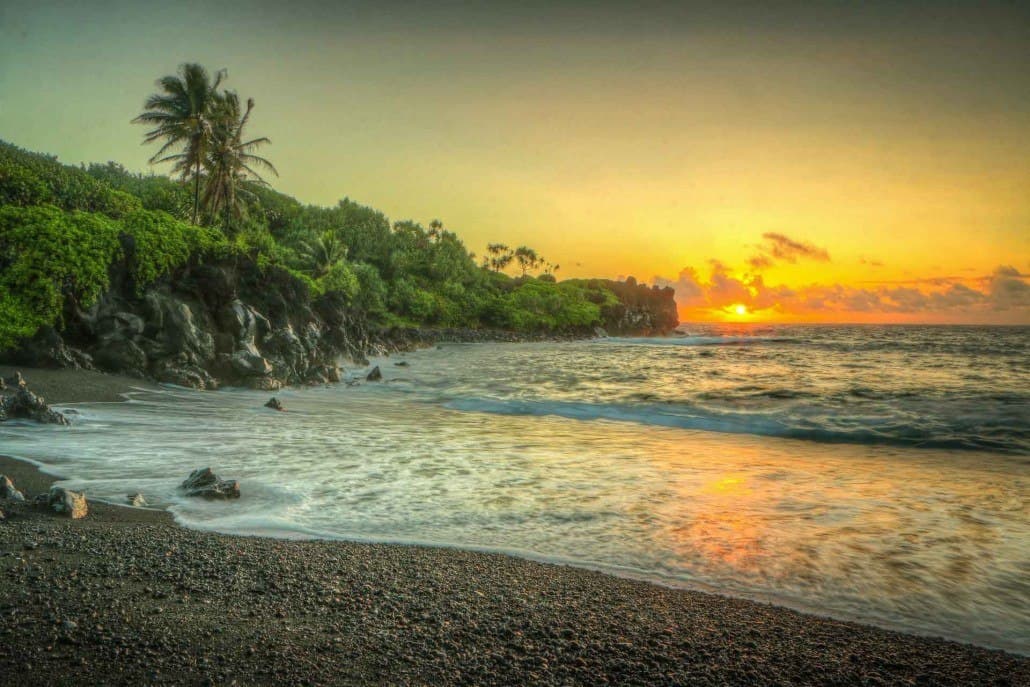
Waianapanapa State Park boasts a black sand beach that’s simply unparalleled on the island of Maui, or anywhere else for that matter. It’s nestled in a private cove… the pitch black granules glisten, dark and mysterious — there is something about it that draws people here. Created long, long ago by the rough surf pounding on a fresh, bubbling lava flow, courtesy of Haleakela. It took a millennia or more to be ground down into a beach. Today, it’s a perfect spot for tanning, dipping your feet in to cool off (black sand is considerably hotter than white sand is) and taking a few photos!
Really though, it’s not just a black sand beach, it’s also a historically significant area for the Hawaiians. Their heartbroken Queen once took refuge in a sea cave here and legends were born. One might say it’s a sacred place. Perhaps that’s because there are numerous impressive, naturally-formed structures that simply overwhelm the senses. A striking coastline, mysterious caves, unpredictable blowholes and picturesque sea arches are the backdrop. If you stay a little while, surely your mind will wander (which is exactly what it’s supposed to do on vacation) as our guides “talk story” about Hawaiian lore and legends. Let us transport you back to “kahiko” (ancient) times. Stories of love, duty, family, war, peace, joy and their daily struggles for survival in Hawaiian culture. It was a time of living simpler and more “aware” than we do today. It’s definitely a once in a lifetime experience that is not to be missed!
Small Red Shrimp
There is an unique inhabitant of these pools. It’s a small, red shrimp called “opae’ula“. The opae’ula didn’t just adapt to live in these brackish water conditions, they thrive here. Only five of the eight major Hawaiian islands have anchialine pools. Of course Maui has them and the locals take care of them because it’s part of their sacred Hawaiian culture. The pools are formed from the erosion of the volcanic rock over long periods of time. There are several pools located in Waianapanapa State Park. Just another reason to love Maui!
Anchialine Pools
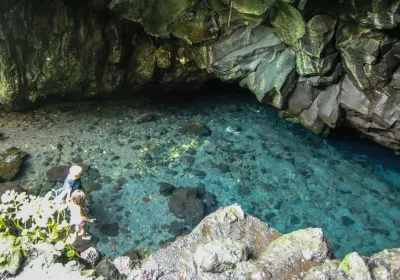
These are unusual inland pools of fresh and saltwater that remain relatively un-mixed. The little known fact that these pools have a series of underground tunnels that connects to the ocean makes them very special indeed. Simple and natural in design, the aforementioned tunnels allow the seawater to flow into the pools, all while keeping the saltwater beneath the fresh water. When the tides change, so do the levels of fresh and saltwater in the pools, but remember, the fresh water will always stay on top because it is less dense than salt water.
Natural Stone Arches
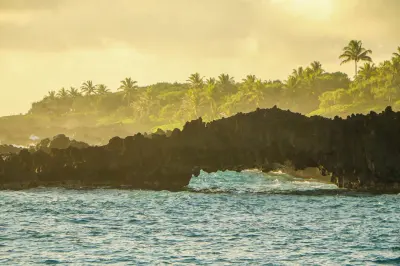
All you need is a clear day and you’ll be able to see and photograph completely through it, as if peering through the eye of a giant needle. And if you time it right and the waves are big enough, you might just luck out and one of the big waves will crash behind it and force water through it, creating a memorable photo op. To locate it, stand near the blowhole, look towards the west and you will see a natural stone arch at the tip of the bay.
Blow Holes
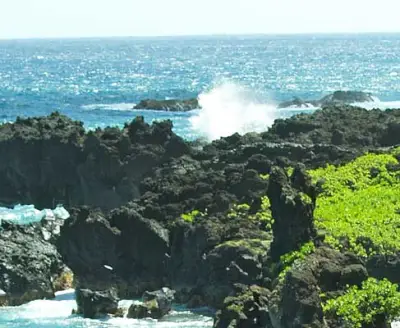
A famous group of impressive blowholes is located nearby. They come to life when the waves crash into them, forcing seawater up and out through the holes, sometimes several feet, (splashing everything in the general vicinity). It’s especially eventful when the tide is high and the waters are rough. (NOTE TO SELF: the most active blowholes have no vegetation around them, so they are pretty easy to spot.) Keeping the perimeters of the “splash zone” in mind while exploring is advisable, unless of course you like saltwater showers!
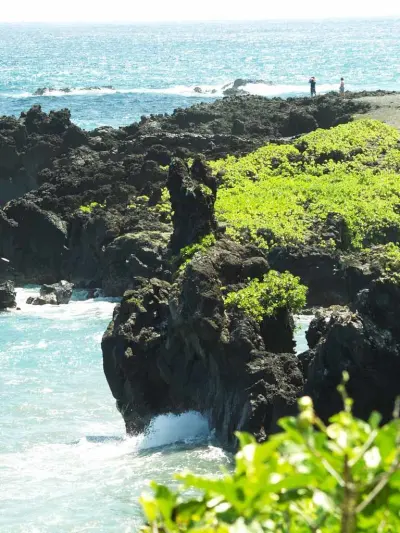
Sea Stacks
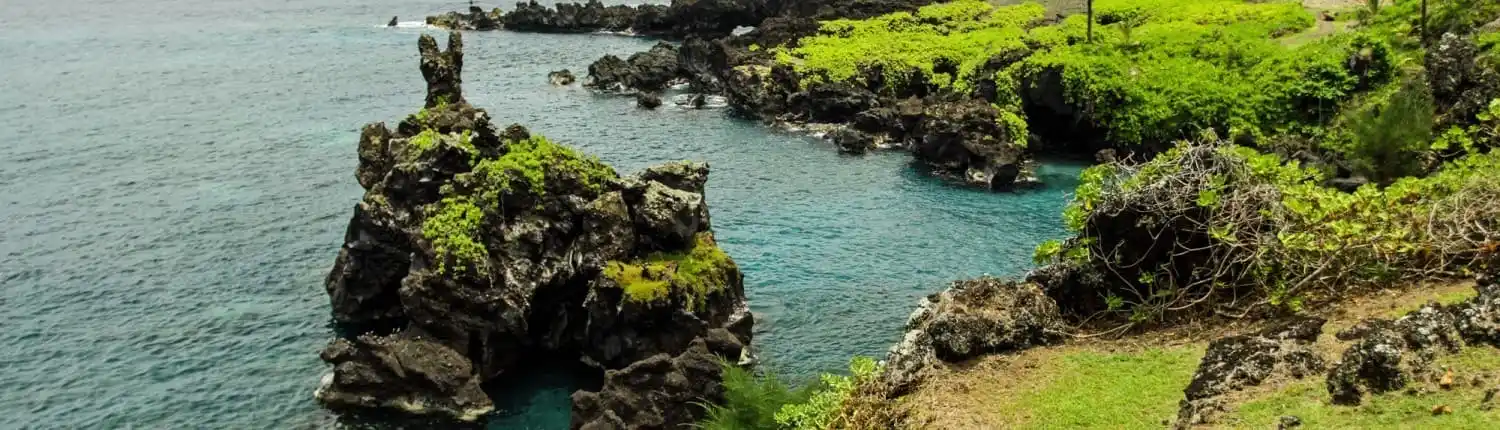
The volcanic characteristics of the island make up the raw materials for Mother Nature to create many of the unforgettable features you’re sure to discover along the rugged coast of Waianapanapa State Park. The ocean’s pounding surf, over timeless aeons, has worn away the softer rock along the shore naturally to create many stunning structures. Get the camera ready for once-in-a-lifetime pics of enormous sea stacks, (giant pillars of rock that have risen up from the ocean floor). Notably, many of those stacks which dot the coastline are covered with numerous vibrant species of green plants that have created a convenient, beautiful resting spot for several of the seabirds. They also have been known to function as a shelter for the local sea turtles from the rough waters found on this side of the island.
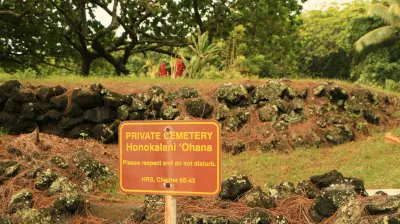
Hawaiian Cemeteries
These peaceful, respectful tributes to those who lived before us are scattered across Maui and the Hawaiian islands. Many are japanese-style burial grounds and are viewed as a testimony to the long history of Japanese cultural influence in the islands. Minimalist in nature, simple stones mark the graves and islanders cherish these sacred places. You will notice that they are kept immaculate, out of respect. Should you visit one, please, do not touch anything. Simply take in the beauty and feel the reverence conveyed throughout the grounds.
WAI’ANAPANAPA CAVE & LEGEND
One of the great things about a tour to Hana is what you can learn about the culture of Hawaiʻi. Hawaiians are deeply connected to the land and in ancient times used the stories and legends of love and life to explain naturally occurring events. This one is from a plaque at Wai’anapanapa State Park where the very cave and fresh water pool in this story can be seen.
This Hawaiian legend states that long ago in Hana a Hawaiian princess named Popoalaea was forced to marry an older chief named Kakea. The chief was very jealous and suspicious of his young bride and beat her often. One day she fled with her faithful serving maid and they hid inside a lava tube cave near Hana’s black sand beach.
To enter the cave required a dive into the fresh water pools called Waianapanapa (the meaning of the word is “glistening fresh water”).The king and his men grew furious looking for them. Finally one day while searching for her he spotted the two women’s reflections in the waters of the cave as they sat on the ledge.
They were killed on the spot and every spring thereafter during the dark nights of Ku when this murder took place the waters seem to glow red, signifying the blood of the princess. It has been found that these red waters are the result of a tiny shrimp called Opae’ula which feed on algae which grows on the rocks in the spring. Thus another Hawaiian legend related directly to natural phenomena!
There are several caves and lava formations within this park including this one at the black sand beach and also a blow hole that can be found by hiking further out along the parks trails.
Other stories have emerged about the Hawaiians who called this area of Hana home. The nearby cemetery holds the names of the families still living on this land who have passed down the stories of old Hawaiʻi from generation to generation.They are reluctant to talk with the many visitors who travel this road daily but they are often friends with the local tour drivers. They have shared stories with them because the local Hana residents know that these tours keep people safe and educate people in an honest and respectful way about the aina (land) and the culture.
If you are traveling on your own along this road please respect the residents and do not trespass or venture into unknown areas along this coastline. Please take a little time to learn the ways of Aloha for driving the road to Hana. There is much Mana (spirit) of old Hawaiʻi in Hana which is why it is as precious today as it was in ancient times! Aloha Nui Loa.
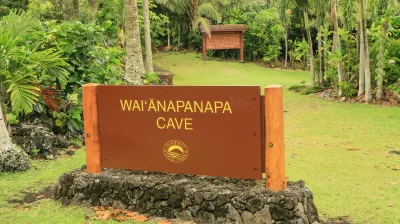
LAVA TUBES AND CAVES ARE NUMEROUS IN THIS STATE PARK.
This video is a poor recording of a Hawaiian performing a mele(chant) in the lava tube cave at Waianapanapa, just off the black sand beach.